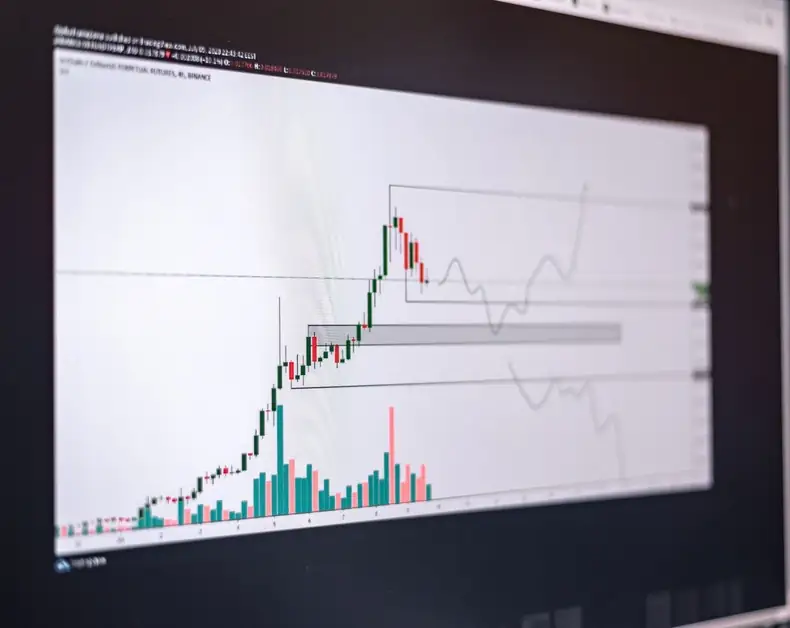
Tech Stocks are attracting significant attention in today’s market. Tech stocks continue to capture attention as they drive the market amidst the S&P 500’s current challenges with market breadth. With many companies in the index struggling to reach their individual highs, the focus has shifted towards those benefiting from advancements in artificial intelligence. This trend highlights the growing influence of AI-related firms such as Nvidia, Microsoft, and Alphabet. As these tech giants maintain their leadership, the debate over market concentration versus broader participation intensifies. Meanwhile, small cap stocks remains a key focus for market participants.
Examining the Market with Financial Advisor Ted Thatcher
In a recent conversation held on 20th October 2026, Ted Thatcher, a seasoned financial advisor with over ten years of expertise in the investment domain, shared insights about the current state of the S&P 500. Notably, he highlighted that a striking 82% of stocks within the index are at least 10% below their peak values, with 60% seeing drops of 20% or more. This paints a picture of disparity, even as the index itself nears historical highs.
Tech Stocks: Leading the Charge
Thatcher points out that the S&P 500, being weighted by market capitalisation, is heavily influenced by larger companies. Among these, the information technology sector holds significant weight, led by giants like Nvidia and Apple. Despite broad declines, approximately 10 companies, primarily in the tech sector, have propelled the market since the lows at the end of March.
Spotlight on AI and Tech Stocks
The driving force behind this trend, according to Thatcher, is the thriving demand for artificial intelligence. Companies like Nvidia, Microsoft, and Alphabet are at the forefront, benefiting from substantial earnings growth. His own forecast sees Nvidia potentially reaching $300, while Microsoft might be aiming for around $600. As of 23rd October 2026, Nvidia closed at $210.96 and Microsoft at $524.51.
Navigating Broader Market Conditions
Thatcher also delves into external factors affecting the market. WTI crude oil, trading at approximately $103 a barrel, is a point of concern. He believes a slide towards the low $80s or high $70s could signal broader market recovery. He emphasises that consumer staples face significant transportation costs, accounting for 30% to 40% of goods costs.
Balancing Portfolios with Tech Stocks and Beyond
In terms of portfolio strategy, Thatcher suggests a mix that includes a focus on leading tech stocks while considering allocations in the Invesco S&P 500 Equal Weight ETF (RSP). He illustrates a hypothetical $10,000 split, with 60% to 75% dedicated to Nvidia, Microsoft, and Alphabet, leaving the remainder for RSP. This approach isn’t a one-size-fits-all but a reflection of his current preference.
The Role of Market News and Stock Watchlists
Thatcher’s insights underline the importance of staying informed through market news and keeping an eye on stock watchlists. This helps in understanding the impact of macroeconomic factors such as oil prices, inflation, and Treasury yields on investment choices. For those keen on tech stocks, it’s crucial to weigh the earnings report and future projections carefully.
Conclusion
While Thatcher’s perspective is informed by his understanding of market dynamics and AI demand, he consistently advises that any investment decision should be aligned with personal financial goals and risk tolerance. For readers interested in tech stocks, it’s essential to consider both the broader market conditions and the specific growth potential of individual companies. people watching small cap stocks are taking note.
For more detailed insights, you can view the full interview with TheStreet here and explore the Invesco S&P 500 Equal Weight ETF for additional information. The small cap stocks market is responding.
In the ever-evolving world of market news, AI stocks continue to shine, even as the S&P 500 navigates challenges in market breadth. For those keeping a keen eye on their stock watchlist, the dynamics of small cap stocks remain a topic of interest. Understanding their potential risks and rewards is essential, particularly as market conditions can significantly influence their performance.
Earnings reports have shown that AI demand is a key driver in this sector, capturing attention and sparking conversations. However, it’s important to recognise that with the promise of AI comes inherent risks, which need careful consideration. As the financial landscape shifts, staying informed about how these elements interplay will be crucial for making educated decisions.
Why are AI and tech stocks leading the market despite a broader decline in the S&P 500?
According to Ted Thatcher, AI and tech stocks like Nvidia, Microsoft, and Alphabet are leading the market due to their substantial earnings growth driven by high demand for artificial intelligence. Even though many S&P 500 stocks are declining, a small group of larger companies in the information technology sector significantly influences the index’s performance. This trend has been particularly evident since the market lows at the end of March. For more details, refer to the interview with TheStreet.
What challenges is the S&P 500 facing in terms of market breadth?
Market breadth challenges are evident, with 82% of S&P 500 stocks at least 10% below their highs and 60% down 20% or more, even as the index approaches a high. This disparity indicates that while the index is lifted by a few large companies, many smaller constituents are struggling. More insights can be found in the interview with TheStreet.
How are external factors like oil prices impacting the market?
High oil prices, with WTI crude trading around $103 a barrel, are a concern for the market. Ted Thatcher suggests that if oil prices were to fall to the low $80s or high $70s, it might signal broader market recovery. Transportation costs, which significantly impact consumer staples, are also affected by these high prices. Additional context is available in the original article.
What is Ted Thatcher’s approach to portfolio strategy during this market condition?
Ted Thatcher recommends maintaining exposure to companies benefiting from AI demand while considering broader market exposure if macroeconomic pressures ease. He highlights that portfolio decisions should reflect individual needs for income, risk tolerance, and time horizon. This perspective is detailed in the interview with TheStreet.
Why is it important to understand the reasons behind a stock’s decline?
Understanding the reasons behind a stock’s decline is crucial because it can indicate whether the drop is due to deteriorating outlooks, sector pressure, or reactions to economic uncertainties like interest rates. This knowledge helps market participants differentiate between genuine opportunities and potential pitfalls. For further reading, see the source from TheStreet.
In other news: Tech Stocks: Nvidia’s 2026 AI Expansion Insights